
YMX and EPX: Why Does a Digital Ecosystem Need Application Scenarios?
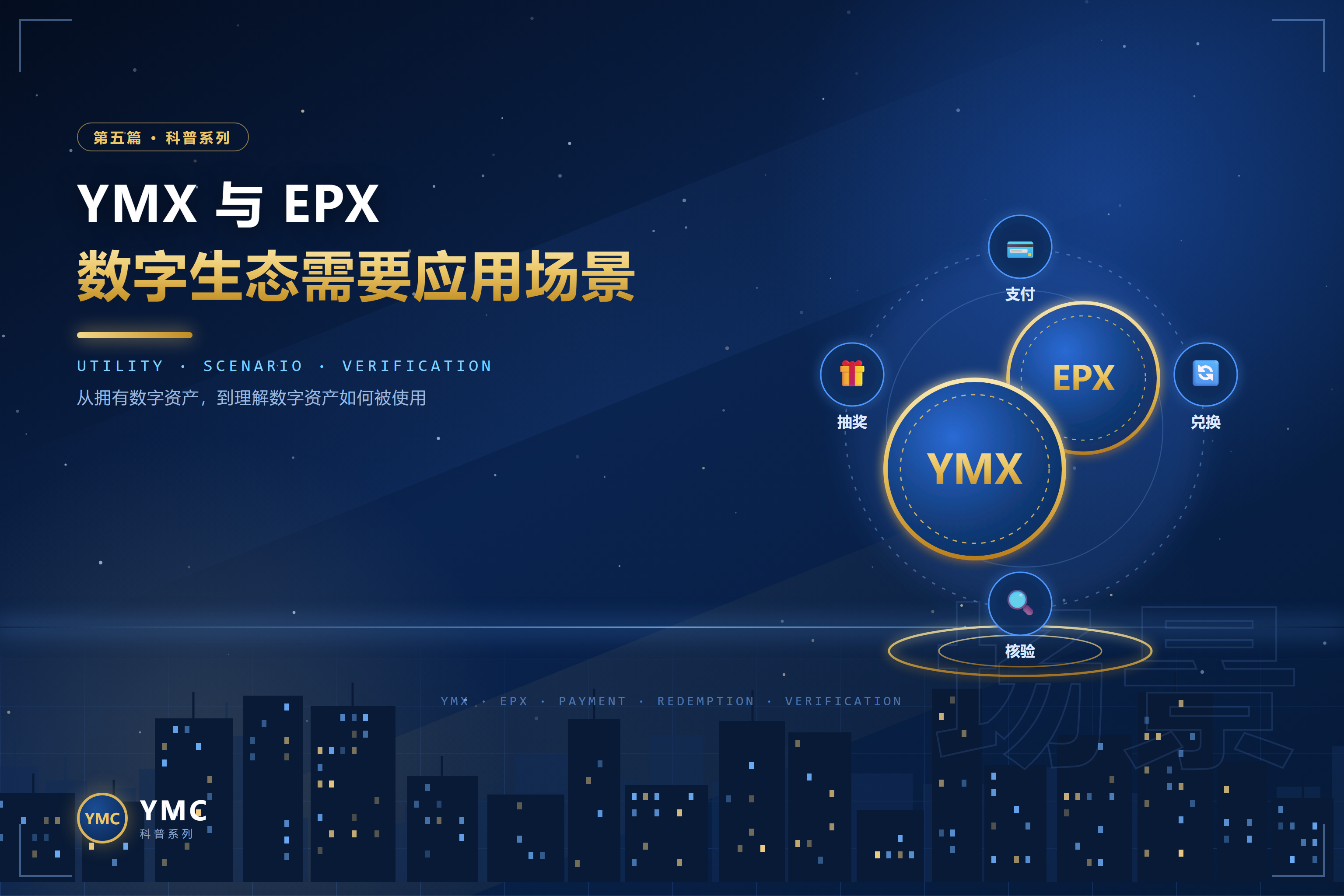
Beyond mere ownership, what else can a digital asset be used for?
When exploring the digital economy, we frequently encounter terms such as:
Digital assets, digital wallets, payments, exchanges, and ecosystem applications.
While these concepts are interconnected, they are not one and the same.
A digital asset may exist within a digital system, but a truly functional ecosystem—one with genuine utility—must also account for why users engage with it, where they use it, and the rules that govern its operation.
Therefore, when discussing digital ecosystems, one question warrants consideration:
What kind of relationship should be established between digital assets and their practical application scenarios?
01 From Digital Assets to Digital Applications
A digital ecosystem typically comprises several distinct components.
It is through the interplay of these components that a relatively complete digital application system is formed.

However, possessing a digital wallet does not necessarily imply the existence of practical consumption scenarios; likewise, the presence of use cases does not guarantee that a given digital asset holds a stable value.
Each component must be evaluated independently.
02 Why are use cases so important?
Consider this: if a digital token can only be generated and held, but lacks a clear purpose or method of use, users will struggle to understand its practical utility within a real-world business context.
Conversely, if a digital system offers applications centered around specific goods or services, users can gain a more concrete understanding of its functionality.
For example:
- Redeeming digital entitlements within scenarios that comply with established rules.
- Executing specific business operations via the digital system.
- Reviewing transaction histories and verifying relevant business information.
- Managing various use cases through a unified set of rules.
The key is not simply having the greatest number of applications, but rather ensuring that each application is genuine, governed by clear rules, and functions reliably.
An effective use case must address a real-world problem.
03 Understanding YMX and EPX within the YMC Ecosystem
Within the YMC ecosystem, YMX and EPX are associated with distinct business mechanisms and usage rules.
Under current operational arrangements, EPX can be used for specific redemptions, lucky draws, and other ecosystem applications, provided they align with the rules of the relevant activities. YMX, meanwhile, relates to specific business mechanisms within the ecosystem.
For precise details regarding usage conditions, redemption ratios, eligibility, and operational procedures, please refer to the official rules published by YMC.
When examining these two assets, consider the following three aspects:

04 From Single-Function to Ecosystem Synergy
The long-term development of an ecosystem depends not merely on the number of digital assets it encompasses, but also on how effectively its various business modules can work together in synergy.

This is a framework for understanding digital ecosystems; it does not imply that all components are already fully integrated.
Whether effective synergy can be achieved in the future depends on technical capabilities, user needs, business rules, and compliance requirements.
05 How should the long-term value of a digital ecosystem be assessed?
You can begin by considering the following questions:
1. Is there a genuine and sustained user demand?
2. Do the application scenarios serve a practical function?
3. Are the relevant rules clear and transparent?
4. Can transaction data be reasonably verified?
5. Are the nature and usage boundaries of digital rights/assets clearly defined?
6. Do the associated business activities comply with applicable laws and regulations?
These questions are applicable to the observation of any digital ecosystem, as well as to understanding the development of YMC-related operations.
Conclusion:
Digital assets are a component of the digital economy, but the digital economy is not limited to digital assets alone.
Wallets, applications, business rules, genuine demand, and data verification collectively determine whether a digital ecosystem can deliver real value.
Moving from merely owning digital assets to understanding how they are utilized is a significant step toward comprehending the digital economy.